a haunted botany: a performance for a forgotten forest
Arnold Arboretum of Harvard University September 6, 2025 Warm, humid, sunny with high of 81 °F
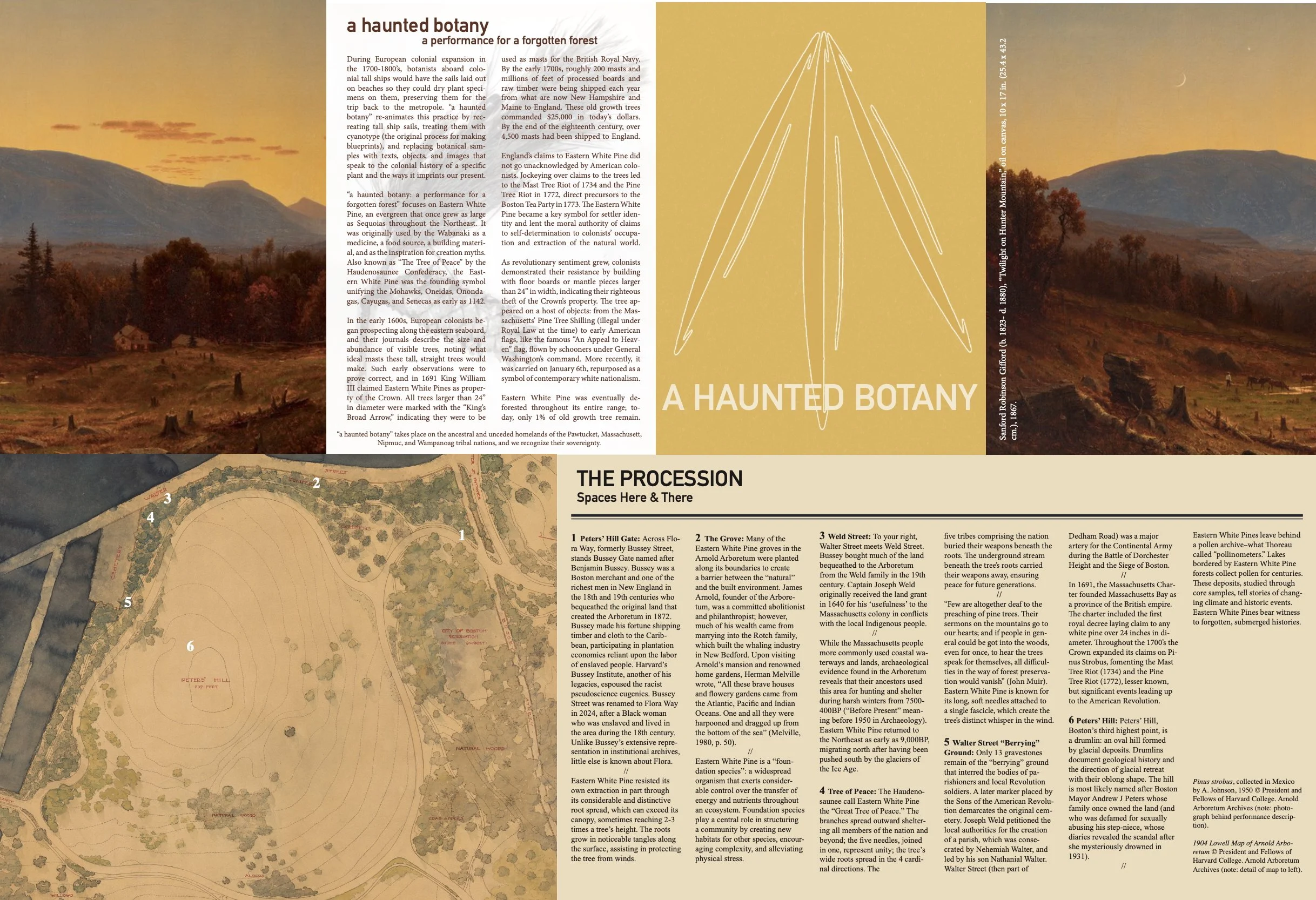
a haunted botany: a performance for a forgotten forest focused on Eastern White Pine, an evergreen that once grew as large as Sequoias throughout the Northeast. It was originally used by the Wabanaki as a medicine, food source, building material, and as the inspiration for creation myths. Also known as “The Tree of Peace” by the Haudenosaunee Confederacy, the Eastern White Pine was the founding symbol unifying the Mohawks, Oneidas, Onondagas, Cayugas, and Senecas as early as 1142.
In the 1600s, European colonists began prospecting along the eastern seaboard, and their journals describe the size and abundance of the region’s trees. In 1691, King William III decreed all Eastern White Pine to be the property of the Crown, marking all trees larger than 24” in diameter with the “King’s Broad Arrow” to be used as masts for the British Royal Navy. The Crown’s claims on pine ignited the ire of colonists, fomenting the Mast Tree Riot of 1734 and the Pine Tree Riot in 1772, early precursors to the Boston Tea Party.
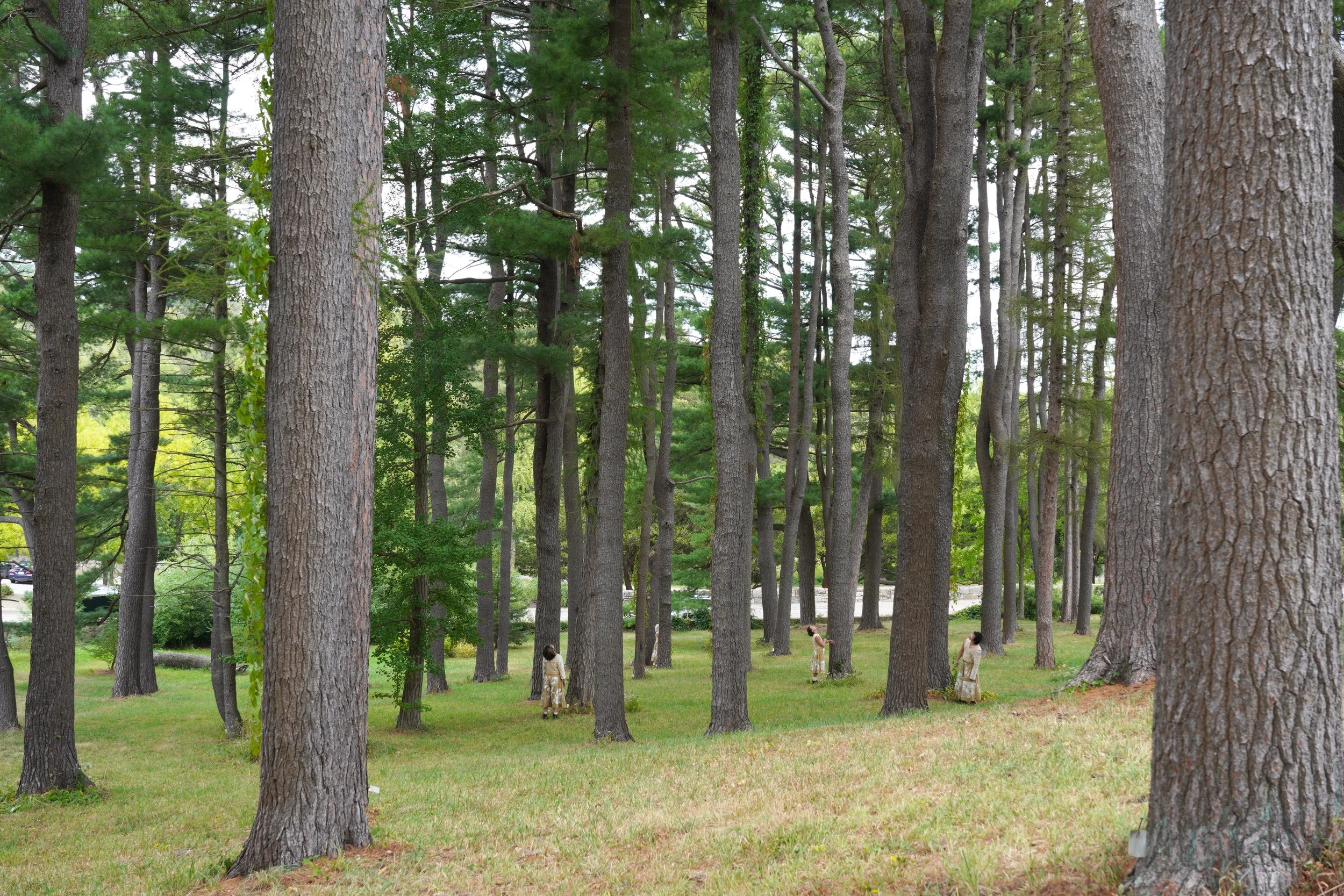
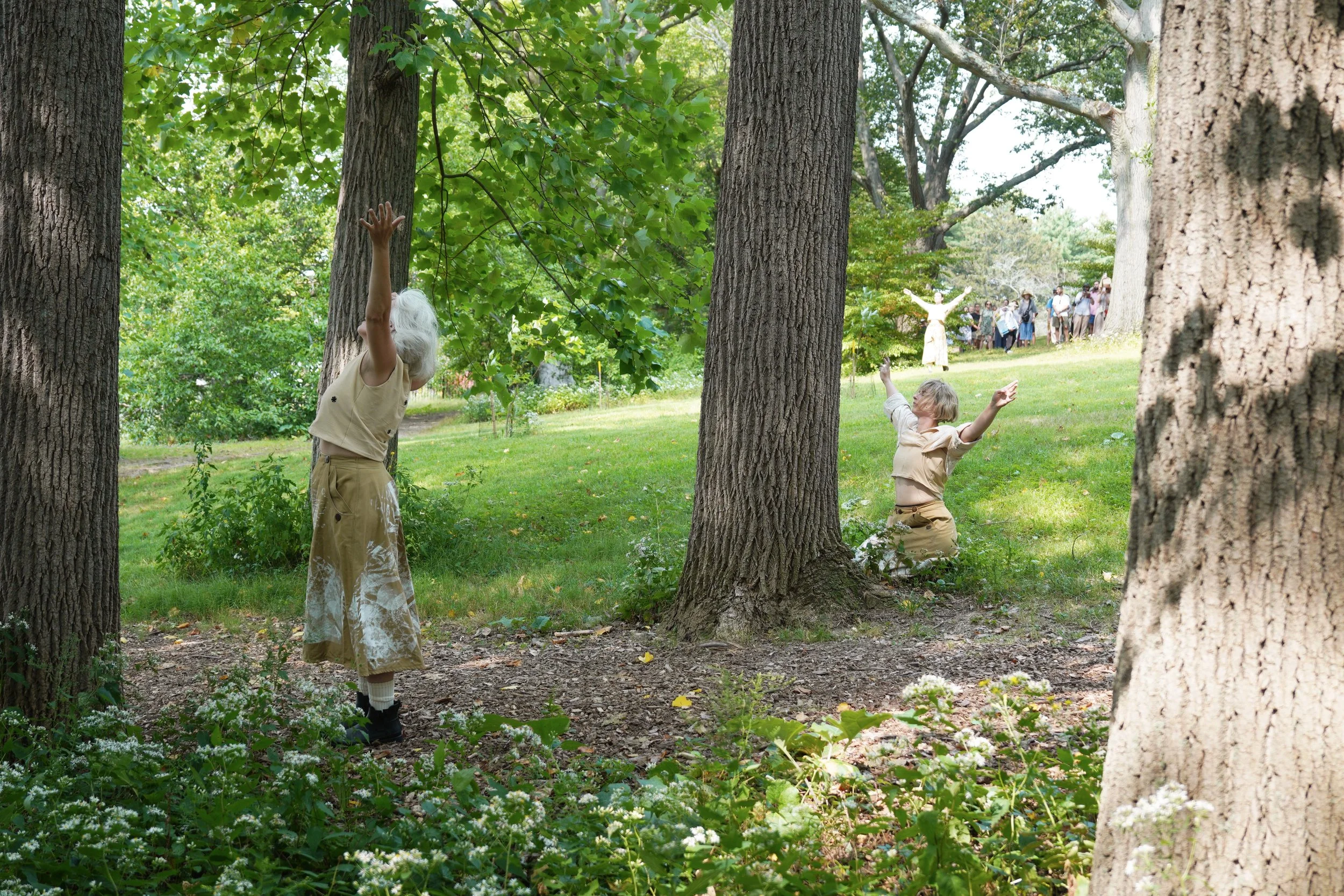
Harvard’s Arnold Arboretum is home to a large collection, in the parlance of the arboretum, of Eastern White Pines. The pines, planted in the 1930s, were meant to create a barrier between the arboretum’s more ‘natural’ landscapes and the built spaces of the surrounding neighborhoods. The performance took place on Peter’s Hill, one of the highest points in Boston. The area now called Peter’s Hill was bequeathed to Harvard for the arboretum by Benjamin Bussey in 1872. Bussey was a Boston merchant and one of the richest men in New England in the 18th and 19th centuries.
He made his fortune shipping timber and cloth to the Caribbean, participating in plantation economies reliant upon the labor of enslaved people.
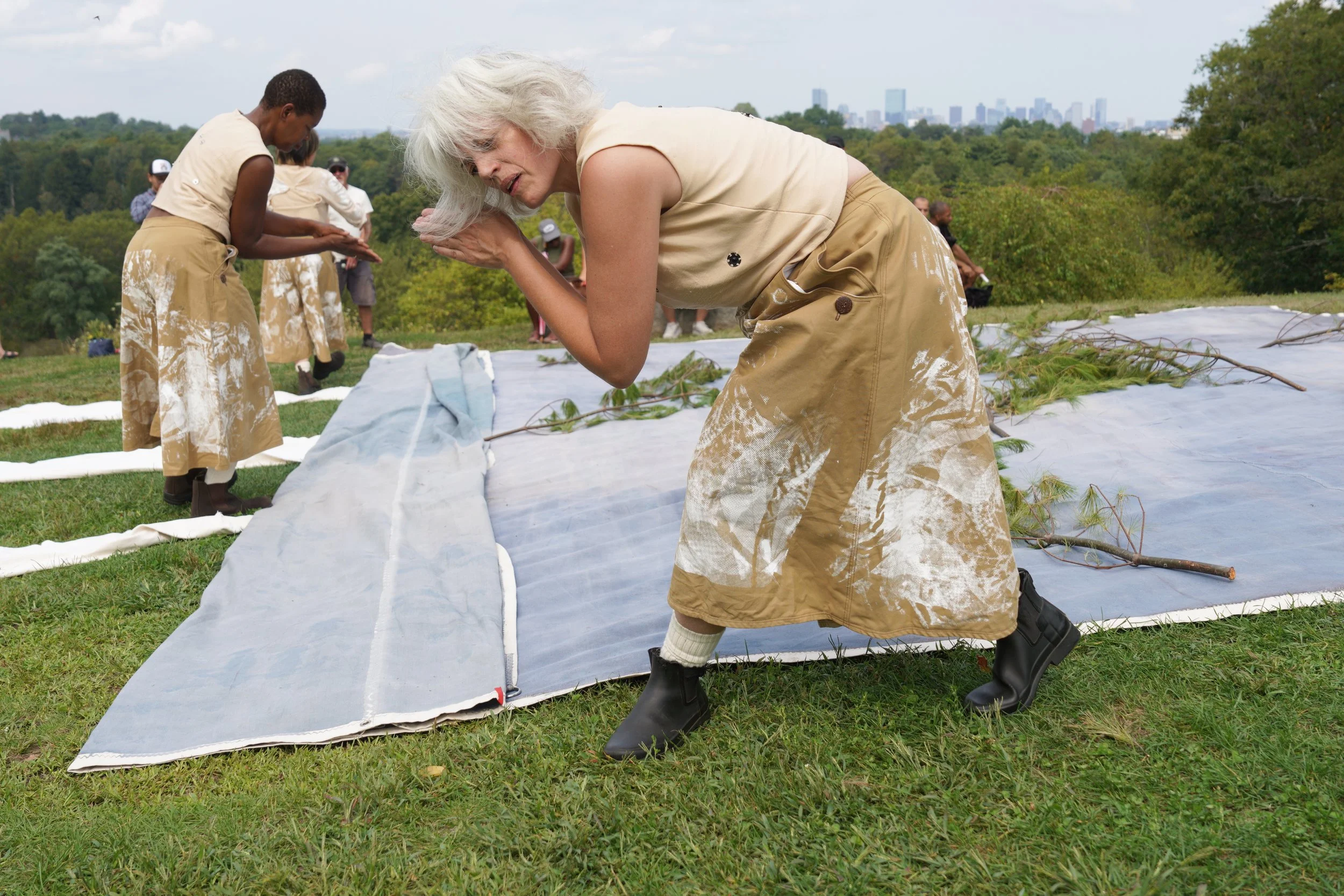
Our second performance focused on Eastern White Pine began with a procession that brought us, and audience members, up to the summit of Peter’s Hill. The walk served as a geographic palimpsest, linking extant landmarks and features in the landscape to Eastern White Pine’s role in the nation’s founding (quite literally as we walked past Revolutionary War-era soldiers’ graves), its industries, and its violences.
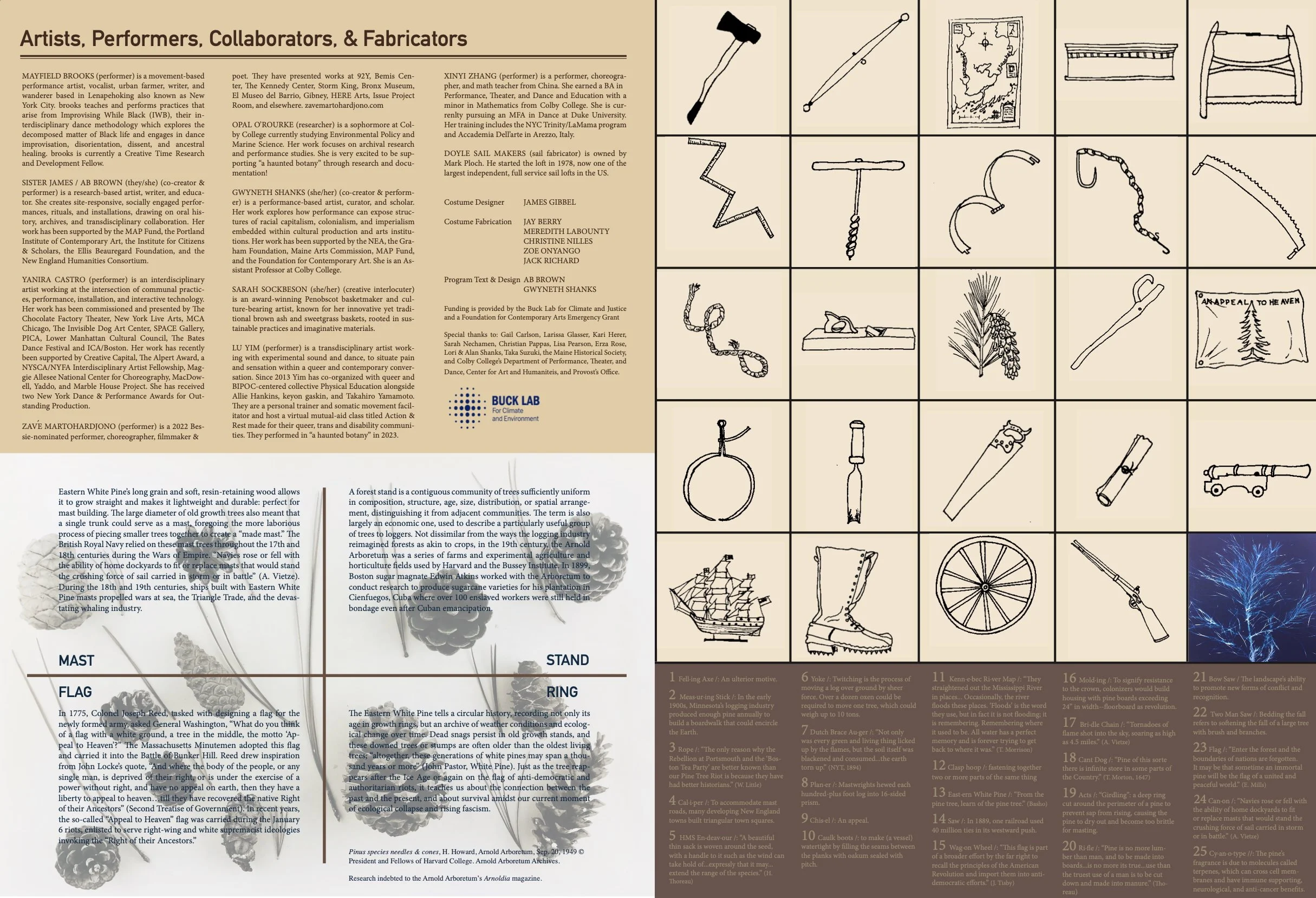
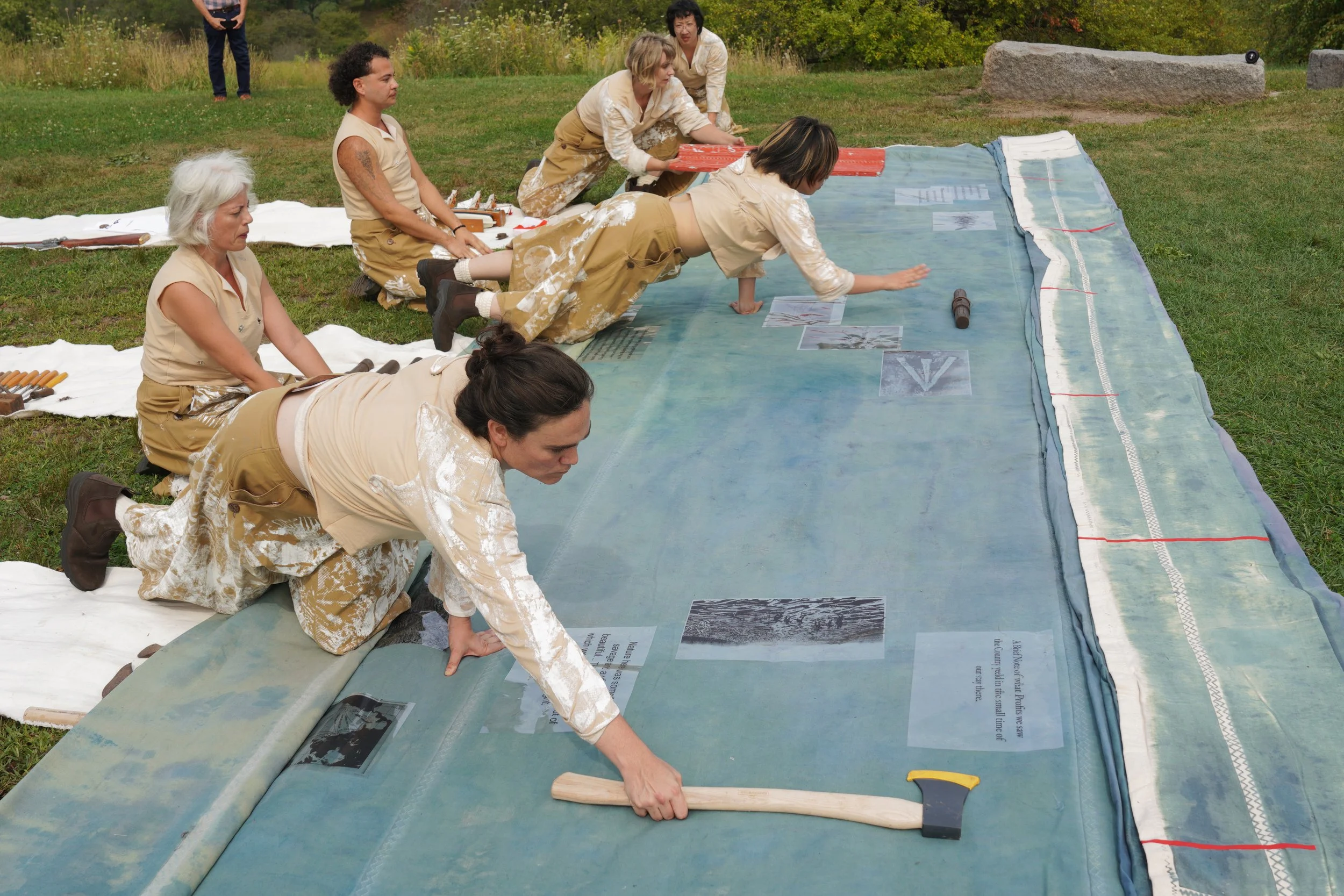
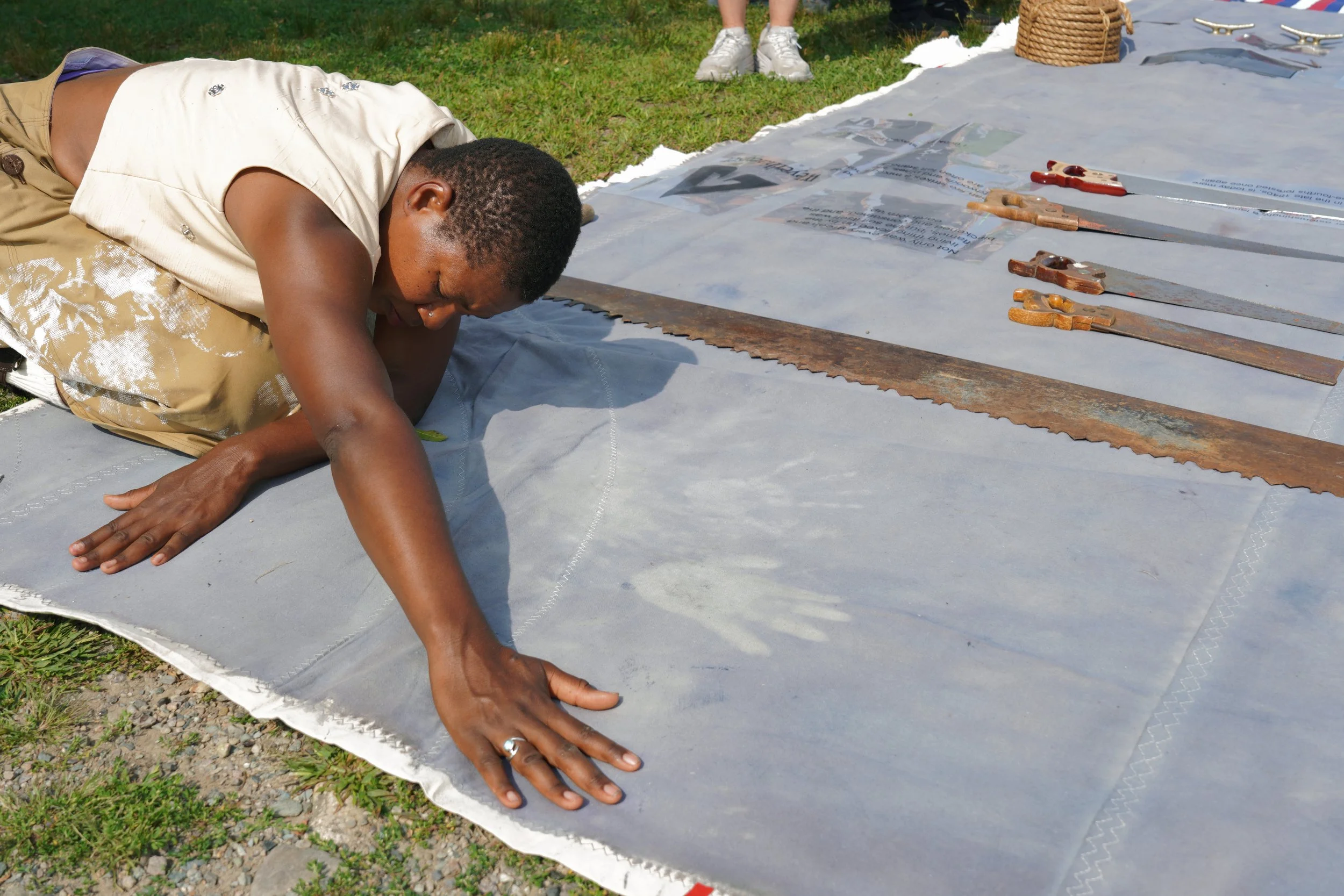
Unlike in Maine, the day was hot and sunny. On one side of the sail, drawing on imagery of the Pine Tree flag, the arrangement of archival facsimiles and objects attested to three of the primary threads of the tree’s use: logging, militarism, and nationalism. On the other side, the many objects and archival images were replaced with Eastern White Pine boughs, recentering the autonomy of the tree itself.
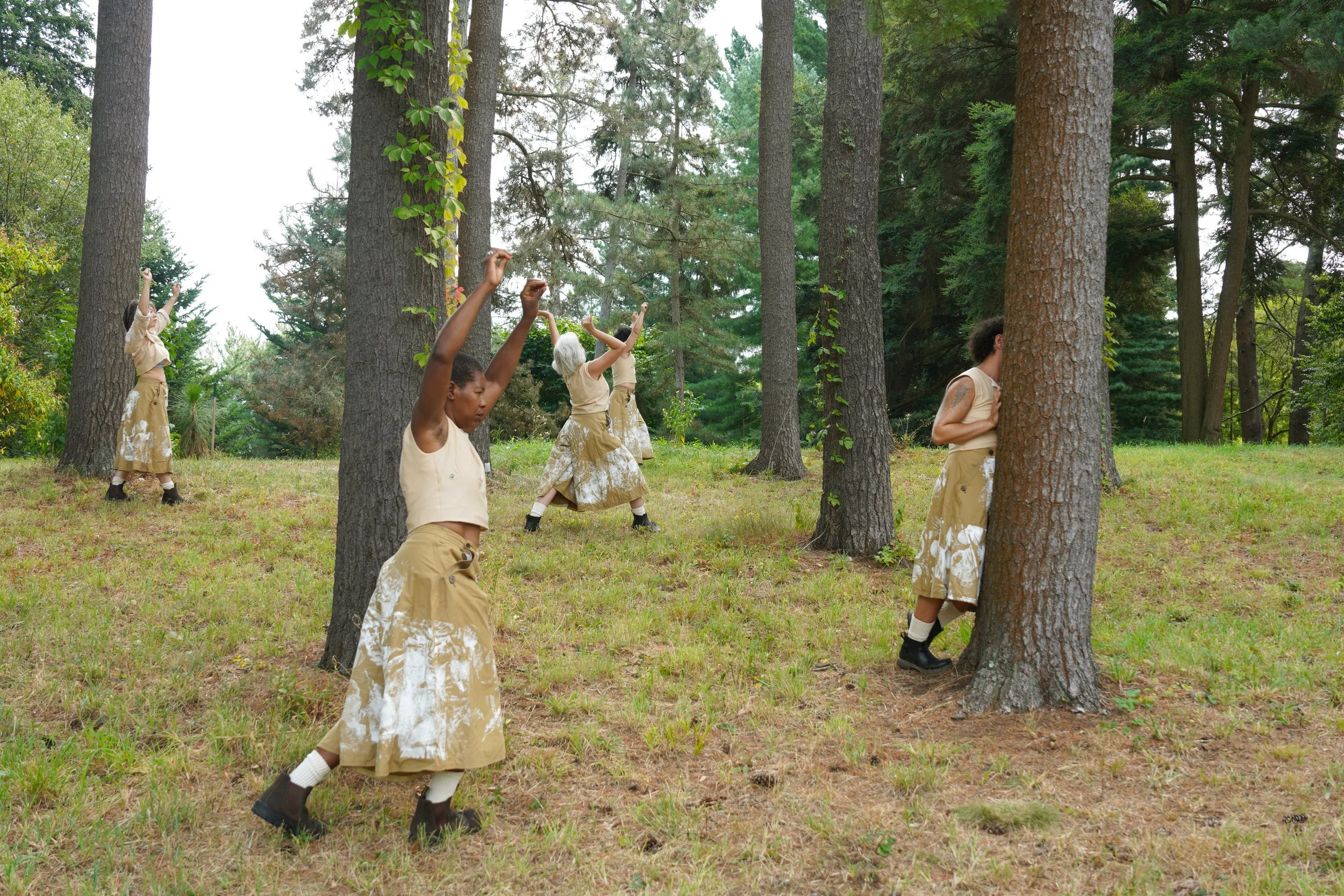
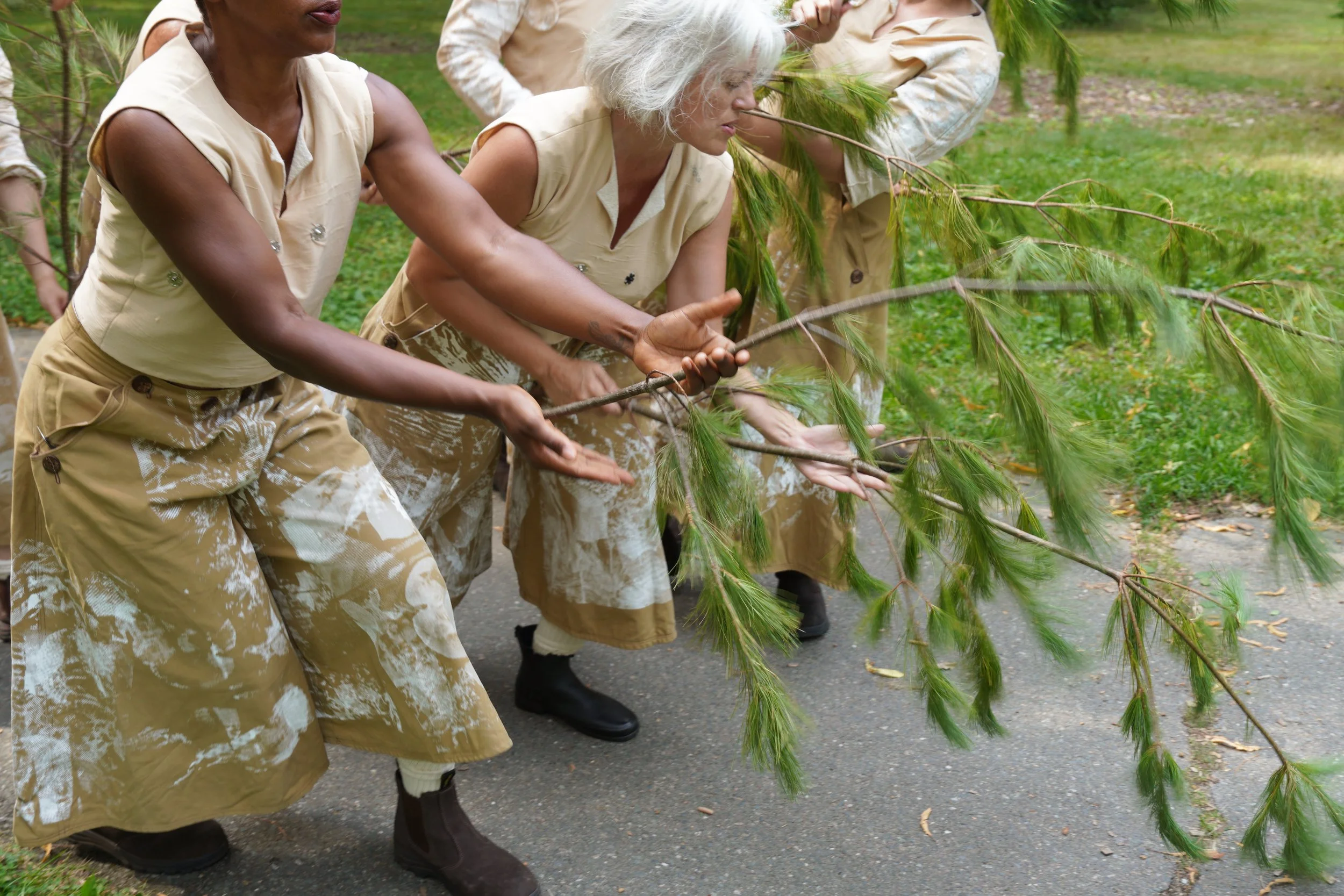
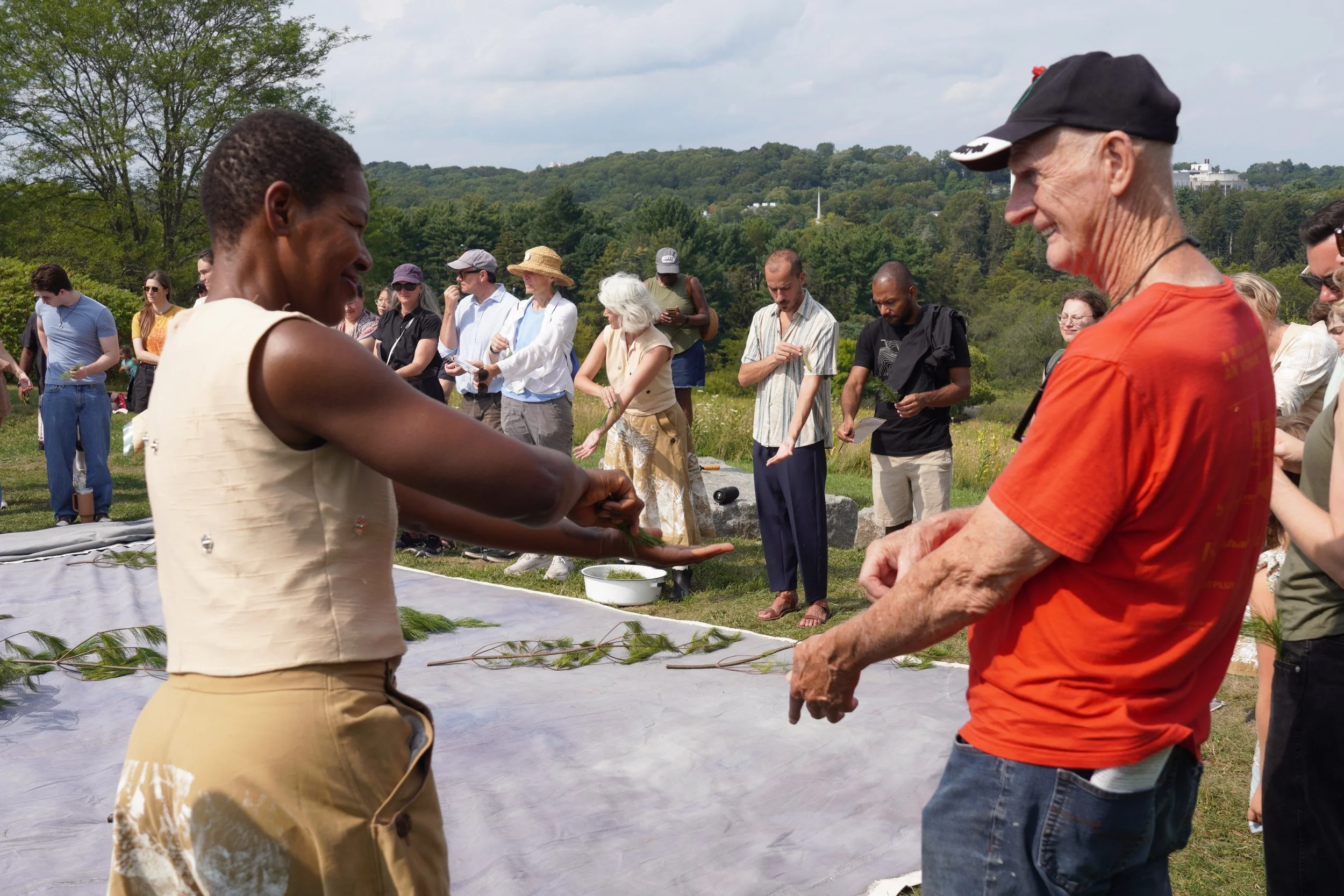
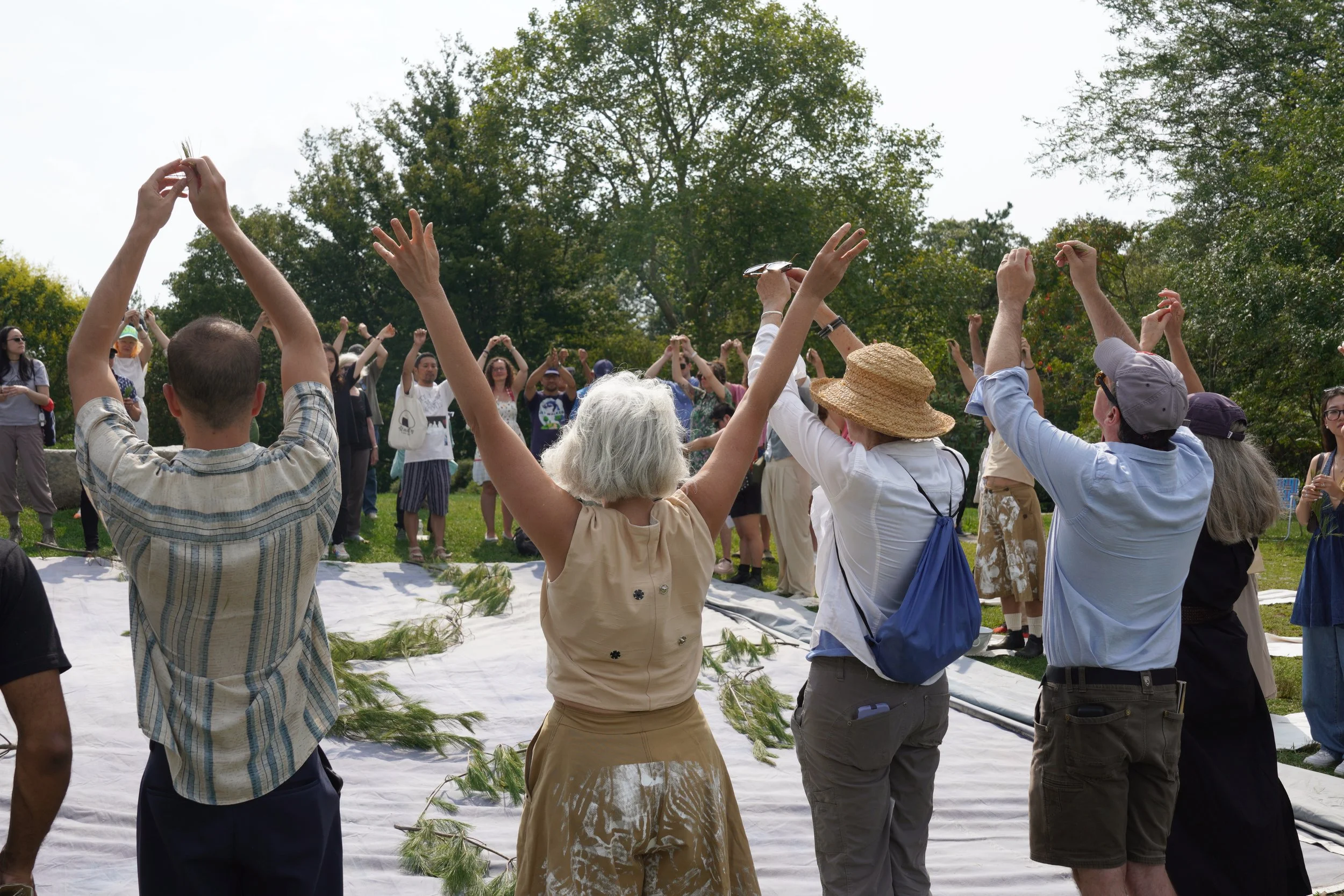
Near the end of the performance, performers approached each audience member and, anointing them with pine tree oil, invited them to stand in a circle around the sail. Passing out handfuls of pine needles, we invited audience members to move along with us, as we taught them a simple choreography focused on the pine’s many sensory properties and pleasures: a collective practice of being with Eastern White Pine together.
Collaborators
Performed by mayfield brooks, AB Brown, Yanira Castro, zavé martohardjono, Gwyneth Shanks, Lu Yim, and Xinyi Zhang
Costumes by James Gibbel
Program by AB Brown & Gwyneth Shanks
Photography by Rachel Hernandez
Videography by Alison Angley
Sail Fabrication by Doyle Sail Loft
Research Assistant Opal O’Rourke
Produced by Sarah Nechamen
Funding provided by the Colby College Performance, Theatre, and Dance Department, Provost Office, Center for Art and Humanities, and the Buck Lab for Climate and Environment.

“The world of today runs on oil. In the 1600s it ran on wood.”
—Samuel F. Manning